
Forge Reads: Animal Farm
A Forge Reads reflection on Animal Farm by George Orwell, examining power, leadership decay, and how ideals collapse when accountability disappears.
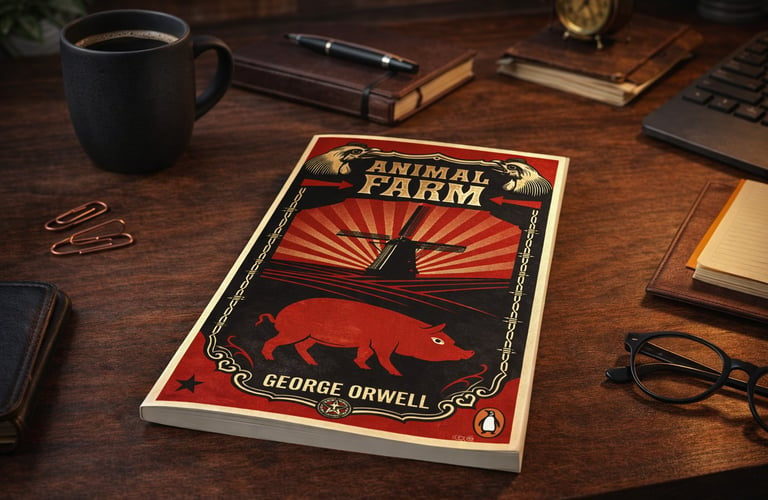
Forge Reads: Animal Farm
Animal Farm is often introduced as a political allegory. That framing is accurate, but incomplete. The book endures not because of the system it critiques, but because of the leadership patterns it exposes.
The story is short. The language is simple. The message is anything but.
What Orwell captures is the slow, almost invisible drift of power. How leadership ideals erode not through sudden betrayal, but through small adjustments that seem reasonable at the time. How language changes before behavior does. How control grows while responsibility shrinks.
This is not a book about villains. It is a book about systems that allow leadership to decay.
Reading It as a Leader
When read young, Animal Farm feels obvious. The manipulation is clear. The injustice is visible. The ending feels inevitable.
When read later, with responsibility on your shoulders, it feels different.
The uncomfortable realization is not that leaders abuse power. It is how easily others adapt to it. How quickly standards shift. How silence becomes normal. How people accept less, step by step, until what would once have been unthinkable feels ordinary.
This is not about intelligence. It is about fatigue, fear, and distance from the truth.
Leadership Without Accountability
One of the book’s most enduring insights is how power behaves when it is no longer checked.
Leadership on the farm begins with ideals. Equality. Shared purpose. Collective responsibility. Over time, those ideas remain in language but disappear in practice. Rules are adjusted quietly. Memory is rewritten. Responsibility moves upward, while consequences move downward.
What makes this effective is how plausible it feels. No single moment demands outrage. Each change is framed as necessary. Temporary. For the greater good.
This mirrors real leadership failures. Rarely does a leader wake up intending to betray values. More often, they rationalize small compromises until the original standard is unrecognizable.
This theme connects directly to The Micro-Manager Problem. Control grows fastest when trust erodes and accountability weakens. It also echoes Leadership Foundations. Integrity is not lost all at once. It is diluted.
The Role of Silence
Animal Farm is as much about followers as it is about leaders.
The animals who notice the changes hesitate. They doubt their memory. They assume they misunderstood. Over time, speaking up feels riskier than staying quiet. Silence becomes a form of participation.
This dynamic feels uncomfortably familiar in organizations. Teams sense misalignment long before they name it. Meetings become quieter. Questions stop. People comply without committing.
This is the pattern explored in The Silent Meeting. When people stop challenging leadership, decay is already underway.
Orwell shows how silence is rarely enforced at first. It is learned.


Why This Book Still Matters
Animal Farm remains relevant because it does not depend on a specific era, ideology, or organization. It exposes human tendencies that repeat wherever power concentrates and accountability weakens.
Leaders justify. Systems normalize. People adapt.
The book does not offer solutions. It does not tell you how to prevent collapse. It simply shows what happens when vigilance fades and responsibility becomes abstract.
That absence of prescription is intentional. The burden of interpretation sits with the reader.
How It Shaped the Way I Think
This book sharpened my sensitivity to small shifts. To language changes. To moments when explanations start replacing transparency. To situations where “trust us” quietly replaces clarity.
It reinforced a simple but uncomfortable idea. Leadership failure is rarely loud at the beginning. It is procedural. Incremental. Rational.
Once you see that pattern, it becomes hard to ignore.
Who This Book Is For
This is not a motivational read. It offers no reassurance. It is not optimistic in the conventional sense.
It is for leaders who want to understand how power behaves when unchecked. For those who take responsibility seriously enough to examine the systems they operate within. For anyone who wants to recognize early warning signs before damage becomes irreversible.
If you are looking for comfort, this book is not it.
If you are looking for clarity, it remains unmatched.
Final Thought
Animal Farm is often described as a warning. That is true. But it is also a mirror.
It reflects how easily leadership drifts when accountability weakens. How silence enables decay. And how ideals survive longest in words, not in action.
That is why it belongs in Forge Reads. Leadership is not only about what you build. It is about what you allow to happen quietly.
About Forge Reads
Forge Reads is a curated collection within Forge of Leadership, focused on books that shape real leadership judgment under pressure. It highlights ideas that hold up once responsibility is real, not shortcuts or theory. Each entry reflects how a book influences decisions, behavior, and balance in practice.
Join Us
Get insights in the Forge community

The Forge Mission
Forge of Leadership shapes modern leaders through clarity, accountability and integrity, blending actionable systems with lessons, stories, and insights that inspire growth and sharpen purpose. Lead with intent!
© 2025. All rights reserved.