
When Performance Slips and Leaders Look Away
Managing underperformance is one of the hardest leadership responsibilities. This article explores why leaders delay difficult performance conversations and how avoidance quietly damages trust, morale, and standards.
When Performance Slips and Leaders Look Away
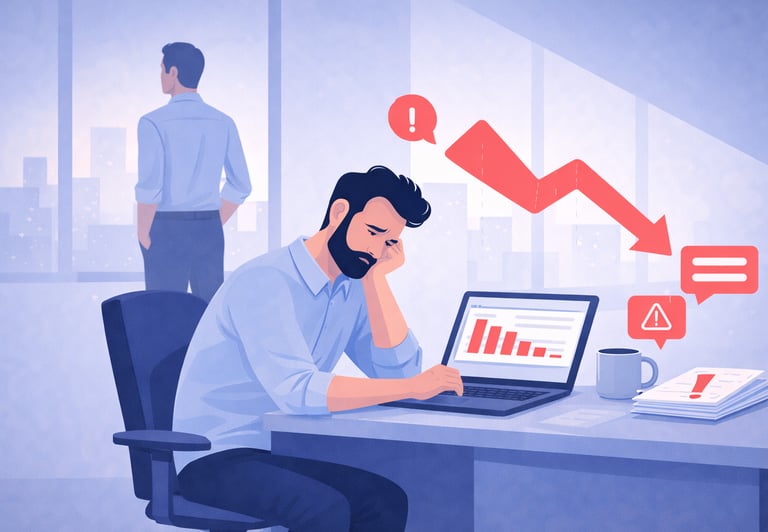
It rarely begins with a dramatic failure.
More often, performance slips quietly. A missed detail. A deadline that stretches. A level of energy that feels lower than before. Nothing catastrophic. Nothing that demands immediate escalation.
Leaders notice.
They tell themselves they will watch it for a while.
And that is where the real decision is made.
The Early Signs Leaders Recognize but Do Not Act On
Most leaders can sense when performance changes. They see patterns others miss. They know what strong work looks like and when something feels off.
The hesitation does not come from ignorance. It comes from reluctance.
Addressing performance means entering uncomfortable territory. It risks embarrassment. It risks tension. It risks being wrong.
So leaders delay.
Harvard Business Review has written extensively about why managers avoid performance conversations, noting that discomfort and fear of damaging relationships are among the most common reasons for inaction.
The irony is that avoidance often damages the relationship far more than clarity ever would.
What Delay Actually Signals to the Team
Underperformance does not exist in isolation. Teams observe it.
When a leader overlooks declining standards, even temporarily, others draw conclusions. Some assume expectations have lowered. Others compensate quietly. High performers absorb extra load, which connects directly to the dynamic described in When Good Leaders Burn Out Their Best People.
Silence spreads.
This mirrors what we explored in Why Your Team Doesn’t Push Back Anymore. When leaders do not address obvious issues, people learn that speaking up is unnecessary or unwelcome.
Performance management is never just about one person. It is about the credibility of standards.
The Personal Cost of Avoidance
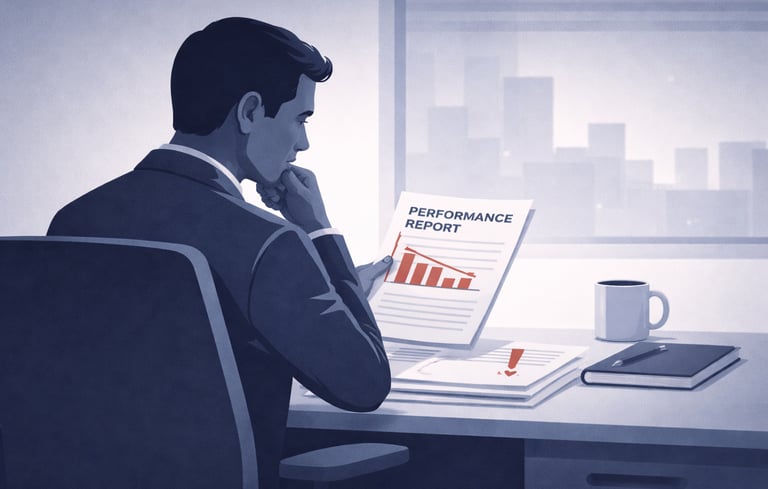
Leaders often believe they are protecting someone by waiting.
They want more evidence. They want certainty. They want to avoid overreacting. They may even hope the issue resolves itself.
In some cases, it does.
In many cases, it settles into a new normal.
Gallup’s research consistently shows that employees crave clear expectations and feedback, even when that feedback is difficult.
When leaders delay feedback, uncertainty grows. The individual may not know there is a problem. Or they may suspect it but lack clarity. Anxiety increases. Confidence erodes.
Avoidance rarely protects people. It prolongs ambiguity.
The Shift From Observation to Judgment
The longer performance issues go unaddressed, the more leaders begin to internalize them.
What started as a missed detail becomes a pattern. A pattern becomes a label. A label becomes a quiet narrative about someone’s capability or commitment.
By the time the conversation finally happens, it is heavier than it needed to be. It is no longer about one issue. It carries months of accumulated frustration.
McKinsey has noted that organizations that delay addressing performance issues often see broader engagement and morale decline, not because of harsh leadership, but because of perceived inconsistency.
Clarity early prevents distortion later.
What Changes When Leaders Address It Early
When leaders address performance shifts early, conversations are lighter.
The discussion can stay focused on behavior rather than character. It can remain specific. It can be collaborative rather than corrective.
The earlier the intervention, the more room there is for recovery.
Addressing underperformance does not require harshness. It requires steadiness. Clear expectations. Calm articulation of what has changed. Space for response.
It also requires consistency. Once standards are stated, they must be maintained. Otherwise, credibility erodes further.
This ties directly to Why Accountability Breaks Down as Leaders Get Busier. Performance management is one of the clearest expressions of accountability. When leaders stop closing loops on performance, the system begins to drift.
Why Leaders Look Away
Leaders avoid performance conversations for understandable reasons.
They fear damaging morale.
They fear being perceived as unfair.
They fear misjudging the situation.
Underneath those fears is something more subtle. Performance conversations test a leader’s own clarity. If expectations were not explicit from the beginning, confronting underperformance feels risky.
Addressing performance requires confidence in standards. If standards have been inconsistent, leaders hesitate.
That hesitation is not weakness. It is a signal that something needs recalibration.
The Discipline of Timely Clarity
Strong leadership does not rush to judgment. It does not ignore reality either.
Timely clarity protects individuals and teams alike. It prevents resentment. It prevents silent compensation. It prevents standards from drifting downward through neglect.
Underperformance is rarely the biggest threat to a team. Unaddressed underperformance is.
Leaders who understand this treat performance conversations as part of their responsibility, not an interruption to it.
Final Thought
Performance rarely collapses overnight. It fades gradually.
Leadership is the act of noticing that fade and choosing not to ignore it.
Looking away feels easier in the moment. It preserves calm. It avoids friction. But leadership is not the preservation of comfort. It is the preservation of standards and trust.
Clarity, delivered early and steadily, strengthens both.
About Forge of Leadership
Forge of Leadership explores leadership where responsibility is real and pressure reveals truth. The focus is on clarity, discipline, and judgment built through lived experience rather than abstraction.
Join Us
Get insights in the Forge community

The Forge Mission
Forge of Leadership shapes modern leaders through clarity, accountability and integrity, blending actionable systems with lessons, stories, and insights that inspire growth and sharpen purpose. Lead with intent!
© 2025. All rights reserved.